
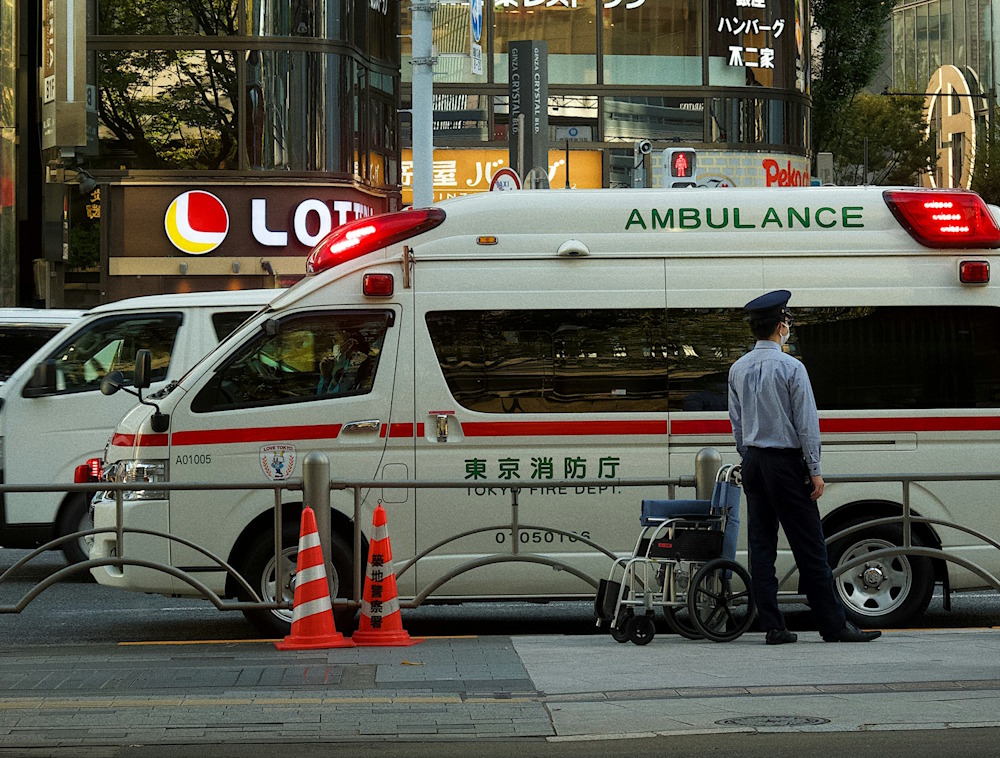
Japan maintains one of the world’s lowest crime rates, but emergencies can happen anywhere. For foreign visitors, knowing the right emergency numbers and understanding common legal pitfalls can prevent serious trouble. Below is a practical guide to emergency hotlines with English support, followed by frequently violated laws that tourists should avoid.
Emergency Phone Numbers (24/7)
| Service | Direct Dial | Languages Available | Notes |
|---|---|---|---|
| Police (emergency) | 110 | Japanese; English via third-party interpreter (availability varies by municipality) | Call for crimes, accidents, or immediate police assistance. |
| Fire / Ambulance | 119 | Japanese; English, Chinese, Korean, Portuguese, Spanish via interpreter in many areas | Say “Kaji desu” (fire) or “Kyuu-kyuu desu” |
| Coast Guard | 118 | Japanese; limited English support | Maritime emergencies only. |
| Tokyo Police English Helpline | 03-3501-0110 | English | 24/7 service for Tokyo; non-emergency police consultation. |
| Japan Visitor Hotline (JNTO) | 050-3816-2787 (from within Japan) +81-50-3816-2787 (from overseas) | English, Chinese, Korean, Japanese | 24/7 tourism support, emergency guidance, hospital referrals. |
| Non-urgent Medical Advice | #7119 (free) / 9110 (pay) | Japanese; interpreter available in some regions | For illness/injury when unsure if ambulance is needed. |
| Tokyo English Life Line (TELL) | 03-5774-0992 | English | Mental health support; Mon–Thu 9am–11pm, Fri–Sun 9am–2am. |
| Foreign Residents Advisory Center (Tokyo) | 03-5320-7744 | English | Mon–Fri 9:30am–12pm & 1–5pm; general advisory for foreign residents. |
Key tips for calling 110 or 119:
- Calls are free from any phone (public, mobile, or landline).
- Operators answer in Japanese. Clearly state “English, please” and wait for interpreter connection.
- Provide location details: nearest landmark, address, or GPS coordinates.
- Do not hang up until the dispatcher confirms understanding.
Other Essential Hotlines
| Service | Phone | Hours | Languages |
|---|---|---|---|
| Lost & Found (Nationwide) | 0570-550-142 | 24/7 | Japanese; limited English |
| Japan Help Line (charity) | 0570-000-911 | 24/7 | English-speaking volunteers |
| U.S. Embassy Tokyo (emergency) | 03-3224-5000 | 24/7 (after-hours: 03-3224-5000) | English |
| Canadian Embassy Tokyo | 03-5412-6200 | Business hours | English/French |
Common Illegal Activities Foreign Visitors Commit in Japan
Japanese law enforcement applies regulations strictly, and ignorance is not a valid defense. The following violations are frequently committed by tourists, often unintentionally.
1. Drug Possession or Use (Zero Tolerance)
- Law: Cannabis, marijuana, cocaine, stimulants, and many prescription drugs (e.g., Adderall, codeine, pseudoephedrine) are illegal, even with a foreign prescription.
- Penalty: Possession of even trace amounts can lead to arrest, detention, and prison sentences (often 1–5+ years).
- Common mistake: Bringing CBD products, medical cannabis, or ADHD medication without prior approval from Japanese authorities.
2. Drunk Driving and Related Offenses
- Law: Blood-alcohol limit is 0.03%. Driving under the influence, lending a car to an intoxicated person, or serving alcohol to someone who will drive are all criminal offenses.
- Penalty: Up to 5 years imprisonment and fines up to ¥1 million (~$10,000 USD).
- Common mistake: Assuming “one drink is okay” or using ride-share apps after drinking without verifying driver sobriety.
3. Street Smoking in Prohibited Areas
- Law: Many cities (including Tokyo, Kyoto, Osaka) ban smoking on streets and in non-designated areas. Fines range from ¥1,000 to ¥50,000 depending on municipality.
- Common mistake: Smoking while walking, outside convenience stores, or near train stations without checking for designated smoking zones.
4. Public Drinking and Disorderly Conduct
- Law: Public drinking is generally legal but restricted in specific areas (e.g., Shibuya on Halloween, Shinjuku Gyoen park) and during certain events. Loud or disruptive behavior can violate Public Nuisance Prevention Ordinances.
- Penalty: Fines or police intervention; repeated offenses may lead to detention.
- Common mistake: Drinking heavily on streets, parks, or outside convenience stores in prohibited zones.
5. Overstaying Visa or Working Without Permission
- Law: Tourist visa-free stays are typically 90 days. Overstaying or engaging in paid work (including freelance, teaching, or gig economy) without proper visa status violates the Immigration Control Act.
- Penalty: Up to 3 years imprisonment or fines up to ¥3 million; deportation and re-entry bans.
- Common mistake: Extending stay beyond 90 days without applying for extension, or accepting cash payments for informal work.
6. Carrying Prohibited Items
- Law: Firearms (up to 15 years prison), locking-blade knives, or folding blades longer than 5.5 cm are illegal without permits. UHF-CB radios not meeting Japanese standards are also prohibited.
- Common mistake: Bringing pocket knives, multi-tools, or walkie-talkies purchased abroad without checking compliance.
7. Shoplifting and Bicycle Theft
- Law: Taking merchandise without payment, or riding someone else’s bicycle (even if “abandoned”), constitutes theft under the Penal Code.
- Penalty: Arrest, criminal record, and potential deportation.
- Common mistake: Assuming unattended bicycles are free to use, or taking small items from stores without realizing it’s monitored.
8. Drone Flying Without Permit
- Law: Flying drones in many urban, residential, or near-airport areas requires prior permission under aviation laws.
- Penalty: Fines up to ¥500,000; confiscation of equipment.
- Common mistake: Launching drones for sightseeing without checking no-fly zones (e.g., Tokyo, near imperial palaces, airports).
Practical Advice for Visitors
- Carry passport or residence card at all times. Failure to present ID upon police request can result in fines up to ¥100,000.
- Save emergency numbers offline. Mobile networks may be unavailable during disasters.
- Use JNTO Hotline for non-emergency guidance. Operators can refer you to English-speaking hospitals, police stations, or legal aid – Link.
- Avoid nightlife districts after midnight. Areas like Kabukicho (Tokyo) and Roppongi have higher risks of drink spiking, robbery, and assault.
Japan’s legal system prioritizes public order and safety. By knowing emergency contacts and respecting local laws, foreign visitors can ensure a smooth and trouble-free stay.

コメント